
Website development proposal template
A build proposal needs to cover the parts clients forget to ask about: integrations, testing, hosting and what happens after launch. This template structures the whole engagement from requirements through to handover.
Who uses this template
Web development agencies
You are scoping a full build and need phases, integrations and acceptance criteria written down.
Full-stack freelancers
You want requirements and testing defined before you quote a fixed price.
Businesses commissioning a site
You want to understand what a complete build proposal should contain before you compare quotes.
What the template covers
Every section below is already drafted in the document, with placeholders marking the details you need to fill in.
Requirements
Functional and technical requirements, including what the site must do beyond displaying pages.
Technology and platform
The stack, CMS or framework proposed, and the reasoning behind the choice.
Build phases
How the work is sequenced, with deliverables and payment attached to each phase.
Integrations
Third-party systems the site connects to — CRM, payments, analytics, marketing tools — and who provides access.
Testing and launch
Browser and device testing, the review process, and the launch plan.
Maintenance and support
What happens after launch: the warranty period, ongoing support, and what is charged separately.
Download the website development proposal template
An editable Word document you can drop your own details into, or a print-ready PDF. Both free — no form, no email address required.
Generate this document from your CRM
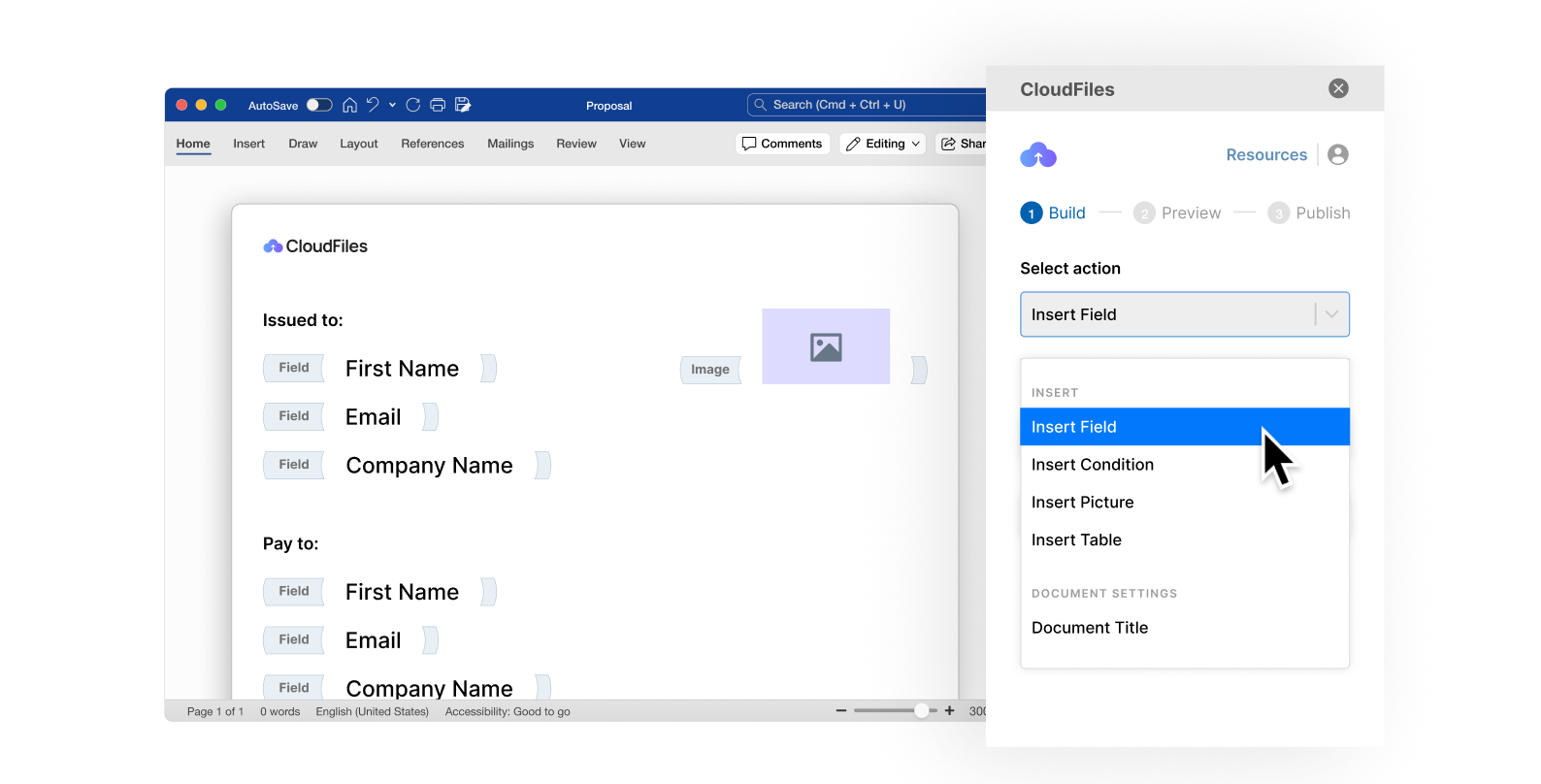
A template still means someone opens a file and retypes the names, dates and figures for every new proposal. CloudFiles Document Generation produces the finished document from a Salesforce or HubSpot record — the same structure, populated with real data, generated in seconds and filed straight back against the record it came from.
Frequently asked questions
Include it explicitly one way or the other. Hosting, domains and third-party licences are the costs most often assumed by the client and not budgeted by the developer — the template has a place to state who pays for what.
List each one and note who supplies the credentials and documentation. Integration work is where fixed-price builds most often overrun, usually because a third-party system behaved differently than expected or access arrived late.
Typically a defined warranty window for fixing defects in delivered work, separated from new feature requests. The template distinguishes the two so that support does not quietly become unpaid development.
Yes — download the Word (.docx) version and edit it like any other document. Placeholders mark every detail you need to replace. The PDF is there when you just want to read, print or send it as-is.
No. It is a general drafting starting point and has not been reviewed for your jurisdiction or your circumstances. If the proposal will form part of a binding contract once accepted, have the terms reviewed before you send it.
No. Both download links on this page go straight to the file — there is no form and no sign-up.
Generate your documents from your CRM
See how teams turn documents like this one into automated output produced straight from Salesforce or HubSpot records.